Shrub trimming
Shrub trimming that follows the plant, not the clock
Foundation shrubs, borders and specimen plants kept in scale with the house. We decide shrub by shrub whether the job calls for hand pruners or shears, and we time the visit so this year's trim does not cost you next year's flowers.
What is included
- A walk through the beds to identify each shrub and how it blooms
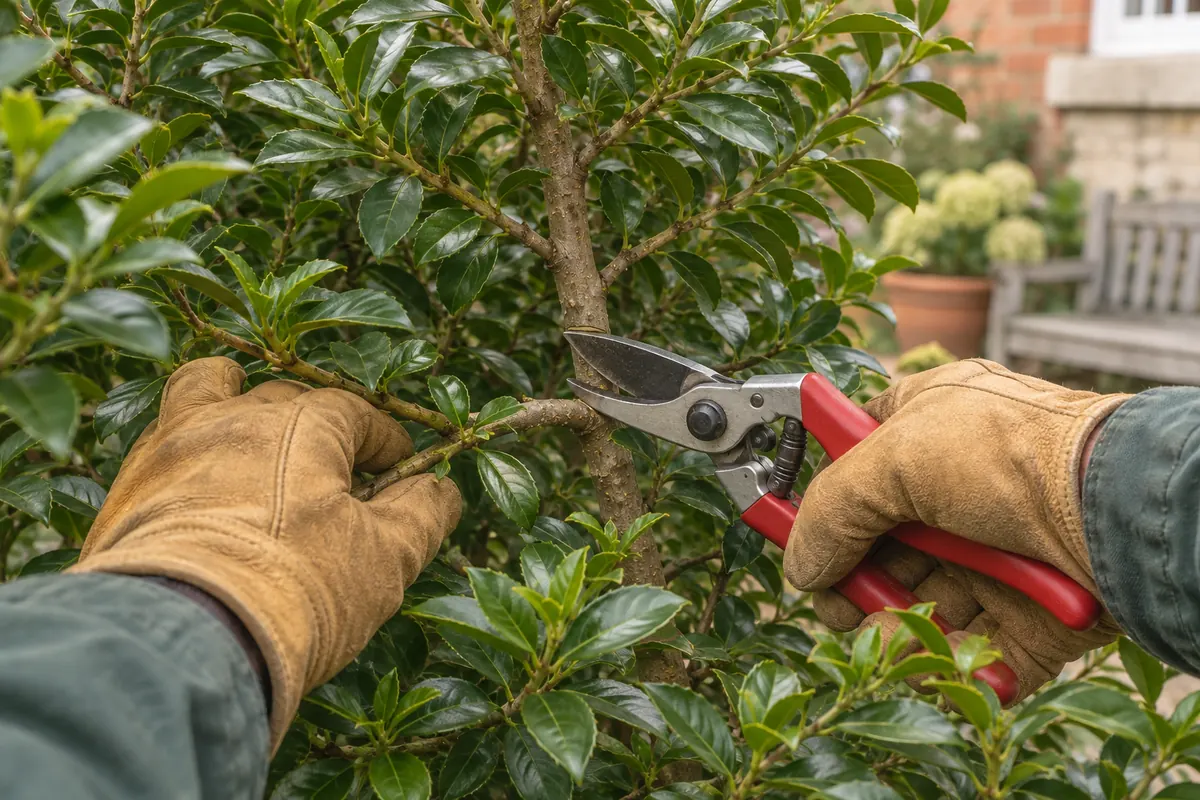
- Selective hand pruning to reduce size while keeping a natural outline
- Shearing where a clipped, formal shape is the look you want
- Dead, broken, rubbing and crossing branches taken out
- Growth cleared back from windows, walks, siding and downspouts
- Clippings gathered and the beds left raked
When we do it
Timing depends on when the shrub sets its flower buds. Shrubs that bloom on last season's wood, such as azaleas, forsythia and bigleaf hydrangeas, are trimmed soon after the flowers fade. Shrubs that bloom on new growth, such as abelia, crape myrtle and panicle hydrangeas, are trimmed in the dormant season before growth starts. Clemson Cooperative Extension sets out the same split in its guide to pruning shrubs.
The pruning calendar shows the window for 75 common shrubs. If your beds hold a mix, we usually recommend more than one visit rather than cutting everything on the same day.
How we approach it
Most of the size reduction is done with thinning cuts: a branch is followed back inside the shrub and removed at a side branch or bud, so the cut is hidden and the plant keeps its shape. The University of Georgia's pruning bulletin explains why this is usually preferred over shearing. Routine shearing packs dense growth onto the outer shell, less light reaches the inside, and the shrub turns sparse and stemmy within.
Shearing still has its place on plants grown as formal shapes. When a shrub is sheared, we open a few gaps in the surface with hand pruners so light reaches the interior.
We also hold to the working limit most extension services give: the University of New Hampshire's pruning fact sheet suggests removing no more than one third of a plant in a year. A shrub that needs more than that is a candidate for rejuvenation pruning, which is planned differently.
Common questions
How often do shrubs need trimming?
It depends on the plant and the look you want. Many flowering shrubs need one well-timed pruning a year. Formal clipped shapes need more frequent attention during the growing season. We set out a schedule in the quote after seeing the beds.
Will trimming stop my shrubs from flowering?
It can if it is done at the wrong time. Shrubs that flower on last season's wood lose their buds when they are cut during dormancy, which is why we trim those after they bloom.
Can you bring a shrub down below the window line?
Usually, but not always in a single visit. If a shrub has to lose more than about a third of its size we will talk through a staged reduction or a rejuvenation cut, and whether that species tolerates it.
Tell us what is growing. We will tell you when to cut it.
Send a few details about your shrubs and hedges. We start with a walk-through of the property, then write a quote for the work and the timing.