Hedge trimming
Hedges cut level, straight and green to the ground
Privacy screens, boundary hedges and low formal edging. We cut to a line, keep the base wider than the top, and watch the calendar so new growth has time to harden before cold weather.
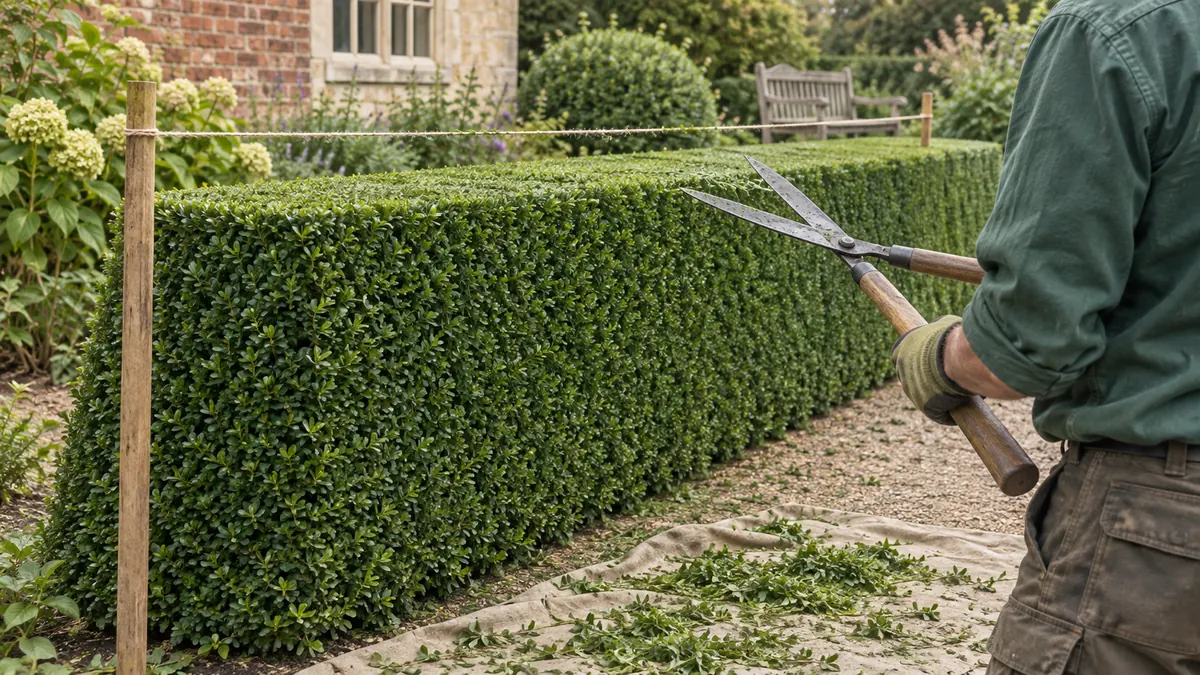
What is included
- Tops cut level to a string line or a set height
- Faces cut straight, with a slight inward slope from base to top
- Height and width reduction where a hedge has crept outward
- Older stems thinned out to let light into the hedge
- Gaps, dead patches and storm damage assessed and reported
- Clippings tarped, removed and the ground beneath raked out
When we do it
Formal hedges are clipped while the new growth is still green and soft, according to Clemson Cooperative Extension, and Iowa State University Extension notes that formal hedges are sheared two or more times a year. Informal hedges left in their natural form need far less.
The Virginia Cooperative Extension shrub pruning calendar marks August through October as months to leave boxwood, privet, yew and most other hedge plants alone, because late growth may not harden off before winter. We plan the last clip of the year ahead of that window.
How we approach it
A hedge cut with vertical sides, or wider at the top, shades its own lower branches until they thin out and die back. The fix is a profile that is wider at the base than the top. University of Maryland Extension gives a working example in its guide to pruning shrubs and hedges: a hedge five feet tall could be three and a half to four feet wide at the base and about one foot wide at the top.
The same guide recommends keeping a hedge vigorous by removing a quarter to a third of the oldest branches each year, and using hand pruners rather than shears on large-leaved plants, since shears slice through the leaves themselves.
Common questions
My hedge is bare at the bottom. Can it be fixed?
Often, depending on the species. Reshaping the hedge so the base is wider than the top lets light back in. Plants that regrow from old wood can also be cut back hard and regrown. Some conifers will not regrow from bare wood, so we check the plant first.
Can you lower a hedge that has become too tall?
In many cases yes. How far it can come down in one visit depends on the species and on how much green growth remains below the cut. We look at that during the walk-through.
Do you use power trimmers or hand shears?
Both, depending on the hedge. Long formal runs are sheared. Large-leaved hedges and detail work are cut by hand so the leaves are not torn.
Tell us what is growing. We will tell you when to cut it.
Send a few details about your shrubs and hedges. We start with a walk-through of the property, then write a quote for the work and the timing.